Table of Contents
She was busy in the kitchen, her hands still soapy from washing dishes. For a brief moment, she paused and looked out of the window. The sound of music and laughter from outside drifted into the house, filling the space she stood in. She stayed there quietly for a second, as if something in that moment had gently reminded her of something she could not quite name.
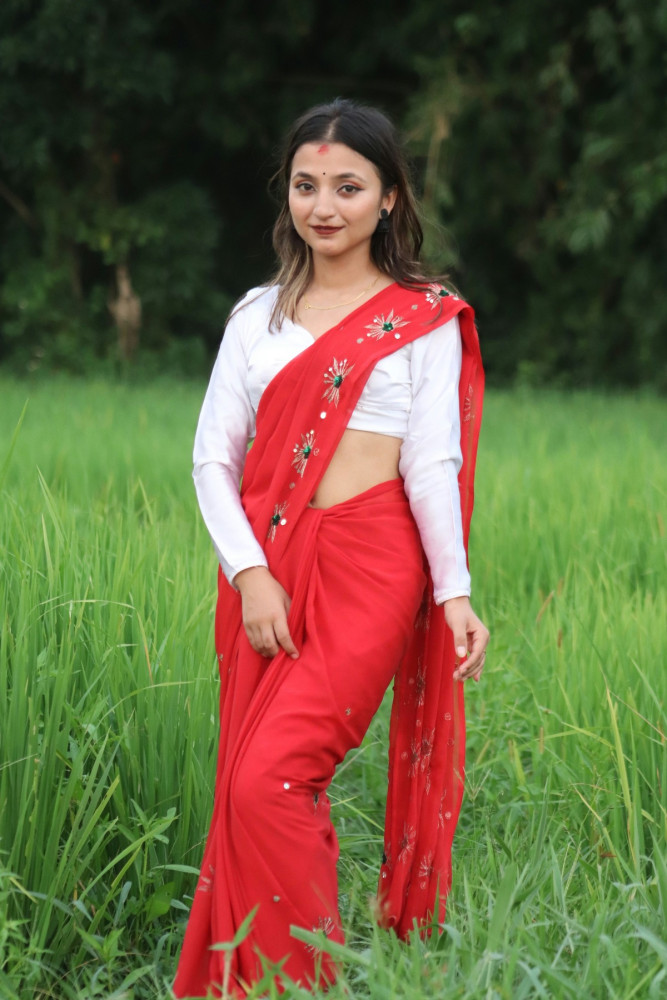
Teej festival is a traditional Hindu festival rooted in the devotion of Goddess Parvati to Lord Shiva, originally celebrated to honor her penance and reunion with Shiva, symbolizing love, commitment, and spiritual strength. Before the fasting begins, women observe “Dar,” a special pre-fasting feast shared with family and friends, which signifies abundance, togetherness, and preparation for the rigorous day ahead. In Nepal, Teej is traditionally celebrated through three main phases: the joyful Dar feast, a strict nirjala fast where women pray for marital harmony and well-being, and visits to Shiva temples like Pashupatinath, where women often dress in red sarees and adorn themselves with mehendi, bangles, and jewelry as red symbolizes marital devotion, strength, and feminine power. However, beyond fasting, dancing and singing were historically at the heart of Teej, as women used folk songs and group dances to express emotions, share personal struggles, and build solidarity, making the festival not just a religious observance but also a powerful cultural space for expression, joy, and community bonding.
She is awakened by the sound of bangles and feet. The house is clean and decorated. The lamp is lit in the god’s room and the good smell of incense sticks is there. She is preparing a gift to send her mother-in-law’s house. She is making sister in law’s favorite selroti. She is doing everything that she forgot to cook her favorite food. She gives everyone food and her daughter’s friends come to invite her daughter to the fair and she quickly gets her daughter a new dress and a new bag. The daughter is happy to see the bag, but the mother? The mother is happy that her daughter likes the bag. Everyone wears a red saree and jewelry and goes out to dance. But she still does not know what to wear. She only has the old saree she bought last year and now that blouse is too big. After washing dishes, she gets ready in the same old saree. She is tired and she has fasted. She had fasted without even drinking water today. She takes off the saree she is wearing and lies down on the bed like this and falls asleep. For her, this year’s Teej was over without her being able to celebrate. She had been busy going out and about since morning, forgetting to take care of herself. It was her favorite festival. Today was teej festival for women, and she had spent it for everyone else. She remembered it and didn’t complain, but others didn’t either. But everyone forgets that Teej festival for women too.

Teej festival for women is not just for Fasting
She lives for her husband without eating or drinking but there is no one to help her with the work. Teej festival for women is celebrated with joy, but women have started to stop enjoying for themselves and start praying for the long life of others, they do not eat their favorite snacks and selroti. They love to celebrate Teej, but when they become daughters-in-law, they forget everything. On Teej, they want to dance, they want to enjoy. She used to eat everything when she was a child, but now she fasts for the Teej festival for women.
She likes cucumber and potato pickles so much. In the name of fasting, she forgot what teej festival for women was actually meant to be. She started emphasizing fasting more than the fair held on Teej, which she loves. She changed the meaning of Teej. She started killing herself and started performing Ber and Peepal Puja for the long life of others. Teej reminds a woman that she is not just someone’s wife, mother, daughter, or daughter-in-law; she is also an independent person with her own dreams, interests, and identity. Therefore, the real beauty of Teej lies not only in the rigors of fasting, but also in the opportunity for women to listen to their hearts, love themselves, and give space to their happiness. Teej festival for women is a day to celebrate their self-respect, self-love, and life.
But one question still remains: When did women start to stop enjoying themselves during their festivals?
Nobody Asked You to Forget Yourself – Teej festival for women is yours too
You are the first to forget yourself. On the occasion of Teej, which comes only once a year, do you think only about others? The strange thing is that the person for whom you are fasting does not know about your favorite festival. Did he buy you a saree of your favorite color? Did you even forget that your favorite color is red? You forgot to wear your favorite color at your favorite festival.
Do you remember going to your sister’s house and trying on all her sareees, crying until you could wear that special one? But now you put other people’s favourite colour, favourite food above your own. But you? You are the one who fought for teej festival for women.
Remember How Your Mother Celebrated Teej?
Why did you forget to dance? I know how much your mother loved to dance. But after marriage, she forgot to dance in the name of marriage. Have you seen your mother dancing? And have you seen your mother laughing out loud? Have you ever seen your mother go to her mother’s house on Teej? You saw your mother making dishes that everyone liked, but have you ever seen your mother making food that she liked for herself? Please don’t forget that Teej festival for women is a celebration for you too.
You learned to sacrifice from your mother, your daughter learns the same thing, and she doesn’t even know what her own existence is, right? Perhaps it’s time to end this cycle. Because the next generation should learn not only sacrifice, but also self-respect.
This Teej, Celebrate Yourself Too This time
why not get a red saree and a red matching bag that you have been eyeing for a long time? Don’t think about anything, just think about yourself, Okay? You like to fast, okay, this time, fast for yourself. Okay, you make selroti for your family, but now make your favorite kheer too. you just make it for yourself, it doesn’t mean you are going against everyone else?
This time, dance openly, not as a daughter-in-law or wife, but as a woman because this teej festival for women is also yours, right? This time, dance freely, and don’t let your desires die. Put aside the fear of whether someone is watching or what someone will think for a while and dance freely, because dance is not just for showing off, it is a means of making your soul feel. Finally, Remember Teej festival for women includes you too.
What About You?
Last year you had bangles on your hands but no smile on your lips. This time, make it different. Let’s change this conservative society. Let’s keep your inner child above whatever society says, right? Wear a new saree, the one that has been in the drawer for a year Wear new sandals, this time dance until your feet hurt?
Teej is not just a day of fasting, responsibilities and traditions. May it be a day for you to meet yourself again. May it be a day for you to bring back that old smile, a smile that was not for others, but only for you. May this time you can take some time for yourself without feeling guilty. You can wear the clothes you like. You can laugh openly with your friends. You can dance to your favorite songs or just stand in front of the mirror and look into your own eyes and say – “I am not just someone’s mother, wife, daughter or daughter-in-law. I am me too. And I am important too.”
Your happiness, your dreams, your smile – they are all worthy of celebration. This Teej, give love to everyone else, but keep a small part of that love for yourself too. While lighting a lamp for others, bring light to the dark corners of your own heart. Because a woman who shines for everyone all year round should shine for herself at least one day. You don’t have the right to put pressure on yourself by thinking that Teej is not for you. Remember, Teej festival for women is for every single woman out there.
We want to hear your story. How did you celebrate last Teej? Did you take time for yourself, or did you once again put yourself last? Share your experiences, feelings, and memories in the comments.
Just remember one thing – Teej festival for women is not just for those who live for others, but for women who carry their own dreams, desires, and existence. And one of the most important of those women is you.